Ali H. Aslan
Turkey's highly polarized political climate is flooded with conspiracy theories on any given topic. Hence, facts are often lost amid speculations. Recently, a frequent target not only in Turkey but also the West has been the Gülen (Hizmet) movement.
One of the most repeated speculations nowadays is that the recent National Intelligence Agency (MİT) controversy happened mainly because the Gülen movement and its supporters within the state prefer security solutions to the Kurdish question, whereas the ruling Justice and Development Party (AK Party) is pro-dialogue and negotiates with the terrorist Kurdistan Workers' Party (PKK). Such simplistic approaches to what is actually a very complicated situation do a disservice to the truth. But more and more people are buying into them in Turkey and in the West. Speculations are finding their way to even the most serious intellectual settings, such as an event hosted by the Stimson Center in Washington last week.
March 2, 2012
Characterization of the Gülen Movement's goals and their priority
fgulen.org
How can the Gülen Movement's goals be characterized?
Firstly, the goals of the Gülen Movement are overt. Decisions are made and goals are set in open-to-all service-networks, in the full light of publicity without concealing the existence or objectives of the Movement and without keeping participants' identities secret.
Goals are set through rational public discussion and decision-making. So the Movement does not establish a separate existence or intention that is free from outside supervision. Another characteristic of goals is that they are consistently positive, constructive and non-disruptive. They are non-violent, non-coercive and peaceful in theory and practice.
In the Gülen-inspired educational institutions specifically, the primary purpose of the education is to ensure respect for objective and universal human values.
How can the Gülen Movement's goals be characterized?
Firstly, the goals of the Gülen Movement are overt. Decisions are made and goals are set in open-to-all service-networks, in the full light of publicity without concealing the existence or objectives of the Movement and without keeping participants' identities secret.
Goals are set through rational public discussion and decision-making. So the Movement does not establish a separate existence or intention that is free from outside supervision. Another characteristic of goals is that they are consistently positive, constructive and non-disruptive. They are non-violent, non-coercive and peaceful in theory and practice.
In the Gülen-inspired educational institutions specifically, the primary purpose of the education is to ensure respect for objective and universal human values.
March 1, 2012
The Function of the Hizmet Movement in Society
Onur Emir
The Gulen Movement (also widely known as the Hizmet Movement)[1] was first established in the 1970s in Turkey with educational and dialogue institutions. Since then, people inspired by Fethullah Gulen have spread it around the world through schools, dialogue centres, charitable aid work, clinics, hostels, and print and broadcast media outlets[2]. This paper asks the question, ’What is the main function of these diverse initiatives?’ Answering that question necessarily answers the more popular question ‘What is the aim of this Movement?’
The Gulen Movement (also widely known as the Hizmet Movement)[1] was first established in the 1970s in Turkey with educational and dialogue institutions. Since then, people inspired by Fethullah Gulen have spread it around the world through schools, dialogue centres, charitable aid work, clinics, hostels, and print and broadcast media outlets[2]. This paper asks the question, ’What is the main function of these diverse initiatives?’ Answering that question necessarily answers the more popular question ‘What is the aim of this Movement?’
February 29, 2012
Pictures of friendship drawn on hearts: Philippines
Dr. Ali Bayram
I've visited the schools and the Turkish cultural centers in Philippines . The schools and the cultural centers in Manila , the capital city, were sublime. But the thing that impressed me more than anything was the amazing relationship between Turkish and Filipinos established by Turkish entrepreneurs, teachers and students who came to this country in the past 10-15 years. They work with great enthusiasm to provide high quality education and for dialog with different segments of the society.
I've visited the schools and the Turkish cultural centers in Philippines . The schools and the cultural centers in Manila , the capital city, were sublime. But the thing that impressed me more than anything was the amazing relationship between Turkish and Filipinos established by Turkish entrepreneurs, teachers and students who came to this country in the past 10-15 years. They work with great enthusiasm to provide high quality education and for dialog with different segments of the society.
Libyan minister would like to see Turkish teachers, schools in his country
Today's Zaman
Libya's minister of higher education said on Thursday he would welcome the establishment of Turkish schools in his country.
Naim Ghariani, Libya's minister of higher education, said his country would like to see the opening of Turkish schools and would welcome Turkish teachers and students. Encouraged by Turkish Islamic scholar Fethullah Gülen, Turkish entrepreneurs have established hundreds of schools across the world, in part, with the goal of erecting bridges of dialogue between these countries and Turkey.
Libya's minister of higher education said on Thursday he would welcome the establishment of Turkish schools in his country.
Naim Ghariani, Libya's minister of higher education, said his country would like to see the opening of Turkish schools and would welcome Turkish teachers and students. Encouraged by Turkish Islamic scholar Fethullah Gülen, Turkish entrepreneurs have established hundreds of schools across the world, in part, with the goal of erecting bridges of dialogue between these countries and Turkey.
February 28, 2012
Who stalls the reforms?
Abdülhamit Bilici
“A group of people, including businessmen, students and teachers who came all the way from Thailand, traveling 9,000 kilometers to cast their votes in the referendum, are now on their way back to Thailand.
Neşet Kahraman, who spent $2,000 on travel in order to cast his vote, said: ‘The referendum was pretty important to us. I would have been in pain and regretted it my whole life if the referendum package had been rejected. I voted for the constitutional amendments for the good of our children.’ Asked how his Thai wife had reacted to him coming to Turkey to cast a single vote, Kahraman said: ‘My wife supported me. Such sacrifices are necessary for the consolidation of democracy’.”
“A group of people, including businessmen, students and teachers who came all the way from Thailand, traveling 9,000 kilometers to cast their votes in the referendum, are now on their way back to Thailand.
Neşet Kahraman, who spent $2,000 on travel in order to cast his vote, said: ‘The referendum was pretty important to us. I would have been in pain and regretted it my whole life if the referendum package had been rejected. I voted for the constitutional amendments for the good of our children.’ Asked how his Thai wife had reacted to him coming to Turkey to cast a single vote, Kahraman said: ‘My wife supported me. Such sacrifices are necessary for the consolidation of democracy’.”
February 27, 2012
Globalization and the Hizmet movement
Ziya Meral *
Ongoing discussions in the popular media and scaremongering conspiracy theories about the Hizmet -- also known as the Gülen movement -- reflect two major intellectual failures.
The first of these is the common hermeneutic fallacy of not being aware and critical of the assumptions one starts with when interpreting reality. Thanks to 80 years of state-fuelled paranoia about anything to do with religion and civil society, the reality of an Islam-inspired civil society movement is automatically perceived as being a threat to our nation. Even the most banal and normal facts are seen as further proof for conspiracy theories.
Ongoing discussions in the popular media and scaremongering conspiracy theories about the Hizmet -- also known as the Gülen movement -- reflect two major intellectual failures.
The first of these is the common hermeneutic fallacy of not being aware and critical of the assumptions one starts with when interpreting reality. Thanks to 80 years of state-fuelled paranoia about anything to do with religion and civil society, the reality of an Islam-inspired civil society movement is automatically perceived as being a threat to our nation. Even the most banal and normal facts are seen as further proof for conspiracy theories.
February 26, 2012
The Gulen Movement teaches providing service and being tolerant
Shad Engkilterra
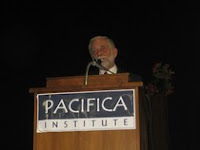 On Feb. 25, 2012, James Harrington, director of the Texas Civil Rights Project, spoke about the Gulen Movement and how to build civil society at the Pacifica Institute for the Salt Lake Interfaith Roundtable’s Interfaith Month celebrations.
Fethullah Gulen started the movement in Turkey in the 1980s as an education and service movement. He created schools that served as alternatives to the Madrassa schools and allowed girls to get an education.

Fethullah Gulen started the movement in Turkey in the 1980s as an education and service movement. He created schools that served as alternatives to the Madrassa schools and allowed girls to get an education.
February 25, 2012
Gülen movement will be liquidated; KCK suspects will be released
Emre Uslu
The title summarizes the gist of the whole discussion of the most recent crisis. This is the plan commonly held by MİT, BDP/KCK (Peace and Democracy Party and Kurdish Communities Union) circles and some pro-negotiation intellectuals.
Public opinion was ready for the implementation of this plan when the prosecutor summoned the MİT undersecretary.
The title summarizes the gist of the whole discussion of the most recent crisis. This is the plan commonly held by MİT, BDP/KCK (Peace and Democracy Party and Kurdish Communities Union) circles and some pro-negotiation intellectuals.
Public opinion was ready for the implementation of this plan when the prosecutor summoned the MİT undersecretary.
February 24, 2012
The confidence crisis and remaining wounds
Bülent Keneş
While on my way to work on Thursday morning, a day on which I was scheduled to prepare an article for the paper, I planned to discuss the potential confidence crisis with its potential repercussions the ruling Justice and Development Party's (AKP) traditional supporters may develop in the long run as a result of the counter campaign that came out of the prosecutors' attempt to probe the relations between the National Intelligence Organization (MİT) and the terrorist Kurdish Communities Union (KCK). However, reading through the Bugün daily, I saw Editor-in-Chief Erhan Başyurt wrote an article similar to what I had in mind. Instead of writing a new article on the same topic, I decided to spare this column for Başyurt's. Let us read the article that questions why the AK Party shot itself in the foot by daring to alienate a community that traditionally supported this reformist party in all critical processes:
While on my way to work on Thursday morning, a day on which I was scheduled to prepare an article for the paper, I planned to discuss the potential confidence crisis with its potential repercussions the ruling Justice and Development Party's (AKP) traditional supporters may develop in the long run as a result of the counter campaign that came out of the prosecutors' attempt to probe the relations between the National Intelligence Organization (MİT) and the terrorist Kurdish Communities Union (KCK). However, reading through the Bugün daily, I saw Editor-in-Chief Erhan Başyurt wrote an article similar to what I had in mind. Instead of writing a new article on the same topic, I decided to spare this column for Başyurt's. Let us read the article that questions why the AK Party shot itself in the foot by daring to alienate a community that traditionally supported this reformist party in all critical processes:
February 23, 2012
Fethullah Gülen’s stance on the Kurdish Issue
Stuart William
A few months ago, shortly after 24 soldiers had been killed by the PKK and everything related to the Kurdish issue seemed to be going backwards, Fethullah Gülen made an important speech about that issue. It was circulated later on the website herkul.org, and aroused (or re-awakened) some controversies. Here, I will first present a summary of his statement before touching upon some of the controversial points that it gave rise to.
Fethullah Gülen began his statement by saying that none of us, including government, were grieved enough about this conflict, not grieved deeply enough, to achieve a solution to it. He said that unless and until we felt the problem deeply enough all the solutions proposed would be lacking in sincerity and prove unsustainable.
February 22, 2012
İkbal Gürpınar Hospital is connecting Sudanese people to life
Kimse Yok Mu
 İkbal Gürpinar Hospital continues to provide services to the citizens of Sudan, and this June it will mark its first year anniversary. ENT, Children, Maternity, Dental, Eye and Internal medicine services are provided at the hospital and the first baby to open her eyes there was named İkbal.

A medical center is being built next to Dadaab Camp
Kimse Yok Mu


KYM has started construction of a medical center in Northern Kenya near Dadaab Camp as well as delivering food and medical aid to those Somalis who are suffering from hunger and thirst.
February 21, 2012
Society, not community!
Ekrem Dumanlı
Considering that the issue of “the Community” has been discussed extensively, I would like to make a humble contribution to this matter. Most of the arguments raised on this matter have been wrong or unfair.
Those who raise these arguments have little knowledge of the cultural atmosphere and the emotions of the members of this society. In this case, even people familiar with the issue may be tempted by these false interpretations.
Considering that the issue of “the Community” has been discussed extensively, I would like to make a humble contribution to this matter. Most of the arguments raised on this matter have been wrong or unfair.
Those who raise these arguments have little knowledge of the cultural atmosphere and the emotions of the members of this society. In this case, even people familiar with the issue may be tempted by these false interpretations.
February 20, 2012
“Hizmet reaches out to others giving much ground for hope” tells Prof. Leo D. Lefebure
Victor Edwin, SJ
In a recent Conference of Jesuits Among Muslims in Rome (September 2011) presenting his views on Hizmet movement, Prof. Thomas Michel SJ of Georgetown University, Washington concluded: "'Are Gülen and the Hizmet community friends or foes?' I must answer that they are our friends. They are the kind of Muslim interlocutors for an active dialogue for which we have been searching since the time of Nostra Aetate."
In a recent Conference of Jesuits Among Muslims in Rome (September 2011) presenting his views on Hizmet movement, Prof. Thomas Michel SJ of Georgetown University, Washington concluded: "'Are Gülen and the Hizmet community friends or foes?' I must answer that they are our friends. They are the kind of Muslim interlocutors for an active dialogue for which we have been searching since the time of Nostra Aetate."
February 19, 2012
The Community has infiltrated the ECtHR as well
Abdülhamit Bilici
Paranoid people will always find something to be obsessed with and people who would manipulate the masses according to their hysteria. Think about how they were able to convince former President Süleyman Demirel and Orhan Birgit, who became the president of the Freedom to Journalists Platform, to raid the Tan newspaper, which was published by the Sertel family.
Paranoid people will always find something to be obsessed with and people who would manipulate the masses according to their hysteria. Think about how they were able to convince former President Süleyman Demirel and Orhan Birgit, who became the president of the Freedom to Journalists Platform, to raid the Tan newspaper, which was published by the Sertel family.
Those who infiltrate the state
Hüseyin Gülerce
The guardianship regime was in control of the country for over a century. It did not want to share its power with anybody. There was only one option left: to intimidate, to repress, to brutalize and to make others submit.
The guardianship regime was in control of the country for over a century. It did not want to share its power with anybody. There was only one option left: to intimidate, to repress, to brutalize and to make others submit.
February 18, 2012
Are politics and Hizmet from different walks of life?
Merve Büşra Öztürk
The possibility of rivalry or conflict between ruling Justice and Development Party (AK Party) and Hizmet (the Gülen movement, which consists of followers of Turkish scholar Fethullah Gülen’s ideas), came to the agenda once again when individuals known to be Gülen followers took the side of the judiciary in a debate between the government and the judiciary after it summoned National Intelligence Organization (MİT) officials to testify in connection with acts of terrorism.
Circles close to the government have argued that the recent move by the prosecutor who summoned the MİT undersecretary and several other MİT officials to hear their testimony is clearly an attack on the government’s terrorism policies as the MİT officials who were summoned were all tasked by the prime minister to negotiate with terrorists. On the other hand, many Gülen supporters argue that the prosecutor’s only intention is to find out whether there are some agents in MİT that exceeded the limits of the negotiation.
The possibility of rivalry or conflict between ruling Justice and Development Party (AK Party) and Hizmet (the Gülen movement, which consists of followers of Turkish scholar Fethullah Gülen’s ideas), came to the agenda once again when individuals known to be Gülen followers took the side of the judiciary in a debate between the government and the judiciary after it summoned National Intelligence Organization (MİT) officials to testify in connection with acts of terrorism.
Circles close to the government have argued that the recent move by the prosecutor who summoned the MİT undersecretary and several other MİT officials to hear their testimony is clearly an attack on the government’s terrorism policies as the MİT officials who were summoned were all tasked by the prime minister to negotiate with terrorists. On the other hand, many Gülen supporters argue that the prosecutor’s only intention is to find out whether there are some agents in MİT that exceeded the limits of the negotiation.
February 17, 2012
Hizmet, forming a party and capturing the state
İhsan Yılmaz
During the recent political crisis surrounding the National Intelligence Organization (MİT), the judiciary, the police, the Justice and Development Party (AKP) and the Hizmet movement, a few pro-AKP writers have implied that Hizmet has been interfering with politics.
Unfortunately, these writers do not appear to have any idea of a proper and well functioning democracy, and this worries me.
During the recent political crisis surrounding the National Intelligence Organization (MİT), the judiciary, the police, the Justice and Development Party (AKP) and the Hizmet movement, a few pro-AKP writers have implied that Hizmet has been interfering with politics.
Unfortunately, these writers do not appear to have any idea of a proper and well functioning democracy, and this worries me.
Columnist says judiciary has evidence against MİT members
Today's Zaman
Mehmet Ali Birand, a columnist for the Posta daily, has said based on interviews he conducted with members of the judiciary regarding prosecutors summoning of top National Intelligence Organization (MİT) members as suspects in an ongoing case that there is strong evidence against the MİT members.
Birand wrote in a column on Tuesday that prosecutors are doing their jobs despite claims that either the Fethullah Gülen community is using prosecutors or the police force is using prosecutors to put the government in a tough position because of its support for MİT’s negotiations with members of the terrorist Kurdistan Workers’ Party (PKK) to find a solution to the country’s long-lasting Kurdish issue.
 |
| Mehmet Ali Birand |
Birand wrote in a column on Tuesday that prosecutors are doing their jobs despite claims that either the Fethullah Gülen community is using prosecutors or the police force is using prosecutors to put the government in a tough position because of its support for MİT’s negotiations with members of the terrorist Kurdistan Workers’ Party (PKK) to find a solution to the country’s long-lasting Kurdish issue.
February 16, 2012
Sabotage: Government - Gülen movement relations
Hüseyin Gülerce
We are facing a new situation that we are all trying to understand. First, the summoning of the undersecretary of the National Intelligence Organization (MİT), Hakan Fidan, and several other MİT administrators to testify as suspects has turned into an unprecedented and serious problem. Those waiting in the wings encouraged a debate that started as a “conflict between the judiciary and MİT” to the point of it becoming a “conflict between the Gülen movement and the government” in which the “main target was the prime minister.”
We are facing a new situation that we are all trying to understand. First, the summoning of the undersecretary of the National Intelligence Organization (MİT), Hakan Fidan, and several other MİT administrators to testify as suspects has turned into an unprecedented and serious problem. Those waiting in the wings encouraged a debate that started as a “conflict between the judiciary and MİT” to the point of it becoming a “conflict between the Gülen movement and the government” in which the “main target was the prime minister.”
PM’s aide dismisses rift between AK Party and Gülen movement
Today's Zaman
Prime Minister Recep Tayyip Erdoğan's former chief advisor and Justice and Development Party (AK Party) deputy Yalçın Akdoğan dismissed allegations of tension between the AK Party government and the faith-based Gülen movement in his article in the Yeni Şafak daily on Wednesday.
 |
| Yalçın Akdoğan |
Prime Minister Recep Tayyip Erdoğan's former chief advisor and Justice and Development Party (AK Party) deputy Yalçın Akdoğan dismissed allegations of tension between the AK Party government and the faith-based Gülen movement in his article in the Yeni Şafak daily on Wednesday.
February 15, 2012
Or is it Gülenophobia?
Merve Büşra Öztürk
Turkey’s frequently changing agenda has recently been dominated by one issue: An İstanbul prosecutor overseeing an investigation into a Kurdistan Workers’ Party (PKK)-linked terrorist organization has asked the Ankara Prosecutor’s Office to hear the testimony of National Intelligence Organization (MİT) Undersecretary Hakan Fidan and has obtained arrest warrants for four other MİT agents.
Turkey’s frequently changing agenda has recently been dominated by one issue: An İstanbul prosecutor overseeing an investigation into a Kurdistan Workers’ Party (PKK)-linked terrorist organization has asked the Ankara Prosecutor’s Office to hear the testimony of National Intelligence Organization (MİT) Undersecretary Hakan Fidan and has obtained arrest warrants for four other MİT agents.
Scenarios explaining the attack on MİT
Merve Büşra Öztürk
The arrest warrants that have been issued for Turkey’s former intelligence chief, his deputy and two other intelligence agents continue to be extensively debated. The warrants were issued a day after Hakan Fidan, the current head of Turkey’s National Intelligence Organization (MİT), rejected a summons to testify in connection with an investigation into a suspected Kurdish terrorist organization.
Many Turkish observers said the judiciary’s move against the current and former spymasters amounts to a power struggle between rival branches of Turkey’s security forces -- the MİT and the police. Some also saw the attempt to force Fidan to testify as a direct challenge to Prime Minister Recep Tayyip Erdoğan. There is agreement among Turkish columnists that it is too soon to determine the real motive behind the arrest warrants; however, their columns are still full of possible scenarios.
The arrest warrants that have been issued for Turkey’s former intelligence chief, his deputy and two other intelligence agents continue to be extensively debated. The warrants were issued a day after Hakan Fidan, the current head of Turkey’s National Intelligence Organization (MİT), rejected a summons to testify in connection with an investigation into a suspected Kurdish terrorist organization.
Many Turkish observers said the judiciary’s move against the current and former spymasters amounts to a power struggle between rival branches of Turkey’s security forces -- the MİT and the police. Some also saw the attempt to force Fidan to testify as a direct challenge to Prime Minister Recep Tayyip Erdoğan. There is agreement among Turkish columnists that it is too soon to determine the real motive behind the arrest warrants; however, their columns are still full of possible scenarios.
February 14, 2012
Catholics, Hizmet bring faiths closer in the U.S.
Saurabh Kumar Shahi
In the view of doomsday reports from the US, it does not come as a surprise how ordinary Americans from all faiths, Christianity, Judaism and Islam, have worked meticulously to bridge the gap and sheer absence of dialogue between these three Abrahamic religions especially in the context of post 9/11 world.
 Leo D. Lefebure, a Catholic priest by training and Professor at Matteo Ricci Chair, Department of Theology at Georgetown University, who has been instrumental in this initiative, was in town to share his experience about his interaction with followers of Fethullah Gulen and his Hizmet movement in the US.
In the view of doomsday reports from the US, it does not come as a surprise how ordinary Americans from all faiths, Christianity, Judaism and Islam, have worked meticulously to bridge the gap and sheer absence of dialogue between these three Abrahamic religions especially in the context of post 9/11 world.

February 13, 2012
Beware!
Ekrem Dumanlı
Because the agenda changes so quickly, this could be detrimental to the people, and in particular to commentators.
If you cannot look at the events through a strong will and comprehensive approach, you could be moved from one end to the other. However, history shows that swift and premature comments later embarrass those who make them.
It of course shocks all of us to hear that the National Intelligence Organization (MİT) undersecretaries and officers were called to testify. This is why everyone attempted to find something meaningful in this move without trying to understand what really happened. Some questioned the MİT-Kurdistan Workers' Party (PKK) talks held in Oslo. However, it has been long since these talks were exposed. Is it reasonable to believe that the judiciary has remained inactive over these five months and that a prosecutor has only now decided to investigate this? It has become evident that the essence of the matter is not the Oslo talks.
Because the agenda changes so quickly, this could be detrimental to the people, and in particular to commentators.
If you cannot look at the events through a strong will and comprehensive approach, you could be moved from one end to the other. However, history shows that swift and premature comments later embarrass those who make them.
It of course shocks all of us to hear that the National Intelligence Organization (MİT) undersecretaries and officers were called to testify. This is why everyone attempted to find something meaningful in this move without trying to understand what really happened. Some questioned the MİT-Kurdistan Workers' Party (PKK) talks held in Oslo. However, it has been long since these talks were exposed. Is it reasonable to believe that the judiciary has remained inactive over these five months and that a prosecutor has only now decided to investigate this? It has become evident that the essence of the matter is not the Oslo talks.
February 12, 2012
Is There 'The Cemaat' Under Every Stone?
Cüneyt Özdemir
Nazli Ilıcak, the author of "Is There The Cemaat Under Every Stone (*)?", queries our new bogeyman, the Cemaat (also known as the Hizmet or Gulen Movement), and determines the reasons lying underneath this fear with concrete evidence.
Nazli Ilıcak, the author of "Is There The Cemaat Under Every Stone (*)?", queries our new bogeyman, the Cemaat (also known as the Hizmet or Gulen Movement), and determines the reasons lying underneath this fear with concrete evidence.
February 11, 2012
Should the Hizmet movement form a political party?
İhsan Yılmaz
Despite the image some have tried to create, we have been writing that the Justice and Development (AKP) and the Hizmet movement are two different entities.
One of them is a political party and the other is a faith-based civil society actor. They have, of course, been on the same page with regard to many sensitive and crucial issues, such as the EU process, democratization, transparency, accountability and so on. However, the movement has always been at a critical distance to both daily political activities and to the AKP; its support has been in principle. Whenever the movement perceived that the AKP was either reluctant on or deviating from the path of democratization, the movement has criticized it. Yet, whenever the movement criticizes the AKP, the party’s staunch supporters and those who follow it blindly in the Turkish media challenge the movement and ask it to form a political party.
Despite the image some have tried to create, we have been writing that the Justice and Development (AKP) and the Hizmet movement are two different entities.
One of them is a political party and the other is a faith-based civil society actor. They have, of course, been on the same page with regard to many sensitive and crucial issues, such as the EU process, democratization, transparency, accountability and so on. However, the movement has always been at a critical distance to both daily political activities and to the AKP; its support has been in principle. Whenever the movement perceived that the AKP was either reluctant on or deviating from the path of democratization, the movement has criticized it. Yet, whenever the movement criticizes the AKP, the party’s staunch supporters and those who follow it blindly in the Turkish media challenge the movement and ask it to form a political party.
February 10, 2012
How did we step into the missionary threat trap?
Markar Esayan
After the Justice and Development Party (AK Party) assumed office in 2002, the “missionary threat” was brought to the agenda of the National Security Council (MGK) out of the blue.
This council had been acting just like a shadow cabinet as it was dominated by top brass commanders and enjoyed powers and authorities that were nearly equal and even superior to those of the government under Law No. 2945. The Secretariat General was the mastermind behind this organization. The decisions made mainly by MGK’s military members would be imposed on civilian members, i.e., the top government executives. In a MGK preliminary meeting held in the fall of 2003 when the ruling AK Party was focusing on promoting the country’s bid to become a full member of the European Union, the “threats from missionaries and non-Muslim minorities” were listed as priority issues to be discussed.
After the Justice and Development Party (AK Party) assumed office in 2002, the “missionary threat” was brought to the agenda of the National Security Council (MGK) out of the blue.
This council had been acting just like a shadow cabinet as it was dominated by top brass commanders and enjoyed powers and authorities that were nearly equal and even superior to those of the government under Law No. 2945. The Secretariat General was the mastermind behind this organization. The decisions made mainly by MGK’s military members would be imposed on civilian members, i.e., the top government executives. In a MGK preliminary meeting held in the fall of 2003 when the ruling AK Party was focusing on promoting the country’s bid to become a full member of the European Union, the “threats from missionaries and non-Muslim minorities” were listed as priority issues to be discussed.
February 9, 2012
What is wrong with the Western media?
İhsan Yılmaz
Major media outlets in the English-speaking world have increasingly been publishing one-sided, biased, anti-Justice and Development Party (AKP) and anti-Gülen pieces. I am not sure if it is just a coincidence, but the frequency of these biased pieces has increased since the “one minute” incident at Davos.
I am critical of Jewish conspiracy theories that explain everything and also claim that Muslims are never mistaken. Nevertheless, that does not mean that a Jewish lobby that advocates for Israel, despite its fatal mistakes and injustices, does not exist. Nor does it mean that the Israeli national intelligence agency, MOSSAD, does not kill people in other countries and engage in all sorts of operations. These are known facts and not conspiracy theories. Sometimes conspiracy theories actually dilute and smokescreen the facts.
Major media outlets in the English-speaking world have increasingly been publishing one-sided, biased, anti-Justice and Development Party (AKP) and anti-Gülen pieces. I am not sure if it is just a coincidence, but the frequency of these biased pieces has increased since the “one minute” incident at Davos.
I am critical of Jewish conspiracy theories that explain everything and also claim that Muslims are never mistaken. Nevertheless, that does not mean that a Jewish lobby that advocates for Israel, despite its fatal mistakes and injustices, does not exist. Nor does it mean that the Israeli national intelligence agency, MOSSAD, does not kill people in other countries and engage in all sorts of operations. These are known facts and not conspiracy theories. Sometimes conspiracy theories actually dilute and smokescreen the facts.
February 8, 2012
Double propaganda
Abdülhamit Bilici
I do not know if you felt the same reading it, but believe me, a column by Etyen Mahcupyan, “Hrant’s parasites,” made me relieved because it demonstrated that I had not lost my mind. I had started questioning my mental integrity in the face of double standards by certain people who have raised their voices because the court did not make any reference to the existence of an organized network behind the Dink murder and did not pay any attention to the Ergenekon terrorist organization, which the evidence at hand suggests is a clandestine organization responsible for many murders.
I do not know if you felt the same reading it, but believe me, a column by Etyen Mahcupyan, “Hrant’s parasites,” made me relieved because it demonstrated that I had not lost my mind. I had started questioning my mental integrity in the face of double standards by certain people who have raised their voices because the court did not make any reference to the existence of an organized network behind the Dink murder and did not pay any attention to the Ergenekon terrorist organization, which the evidence at hand suggests is a clandestine organization responsible for many murders.
February 7, 2012
Short and long-term goals of participants in the Gülen Movement
fgulen.org
What are the short- and long-term goals of participants in the Gülen Movement?
All the short-term goals of participants involve either improving the quality or extending the range of the services offered by the Movement.
The long-term goals include self-improvement and earning God’s pleasure through such services. Interestingly, some of the short- and long-term goals are the same. For example, participants may aim to improve their own qualifications so as to offer a better service, or to serve a greater number of people. Their goals do not relate only to instrumental objectives, such as seeking social status for themselves, or only for a particular community and network, but are more universal in nature. For example, they may wish to spread feelings of love and tolerance, or teach the capacity for dialogue between people who see themselves as different.
What are the short- and long-term goals of participants in the Gülen Movement?
All the short-term goals of participants involve either improving the quality or extending the range of the services offered by the Movement.
The long-term goals include self-improvement and earning God’s pleasure through such services. Interestingly, some of the short- and long-term goals are the same. For example, participants may aim to improve their own qualifications so as to offer a better service, or to serve a greater number of people. Their goals do not relate only to instrumental objectives, such as seeking social status for themselves, or only for a particular community and network, but are more universal in nature. For example, they may wish to spread feelings of love and tolerance, or teach the capacity for dialogue between people who see themselves as different.
February 6, 2012
Ilıcak: Gülen Movement has been used to undermine Ergenekon trial
Yonca Poyraz Doğan
A veteran journalist has said that she tries to shed light on attempts to cover up and manipulate the trials concerning Ergenekon -- a clandestine crime network that has alleged links within the state and is suspected of plotting to topple the government -- OdaTV, the Hrant Dink murder and the Action Plan Against Reactionaryism.
 Nazlı Ilıcak, author of the new book “Her Taşın Altında ‘The Cemaat' mi Var?” (Is the “The Movement” Behind Everything?), which was published by Doğan Books, told Today's Zaman for Monday Talk that those probes and trials were presented as if they were a conspiracy instigated by the Gülen movement through manipulative or misleading media reports.
A veteran journalist has said that she tries to shed light on attempts to cover up and manipulate the trials concerning Ergenekon -- a clandestine crime network that has alleged links within the state and is suspected of plotting to topple the government -- OdaTV, the Hrant Dink murder and the Action Plan Against Reactionaryism.

February 5, 2012
US law professor has no doubt Gülen trial in Turkey was political
Akın Karagülle
James C. Harrington(*), director of the Texas Civil Rights Project and a law professor at the University of Texas, wrote a book titled “Wrestling with Free Speech, Religious Freedom, and Democracy in Turkey: The Political Trials and Times of Fethullah Gülen” on the trial of renowned Islamic scholar Fethullah Gülen in Turkey, which ended with his acquittal being upheld by the Supreme Court of Appeals in 2008.
In an indictment he drafted on Aug. 30, 2000, then-Ankara State Security Court (DGM) Chief Prosecutor Nuh Mete Yüksel filed a lawsuit against Gülen with the Ankara 2nd DGM requesting his conviction under Article 7/1 of Counterterrorism Law No. 3713.
 |
| James C. Harrington |
In an indictment he drafted on Aug. 30, 2000, then-Ankara State Security Court (DGM) Chief Prosecutor Nuh Mete Yüksel filed a lawsuit against Gülen with the Ankara 2nd DGM requesting his conviction under Article 7/1 of Counterterrorism Law No. 3713.
February 4, 2012
Three Greatest Enemies: Ignorance, Poverty and Disunity
Cemil Genç
Fethullah Gülen has stated that society’s three greatest enemies are ignorance, poverty, and internal schism (separatism) and inspired people to consider applying some practical solutions.
Fethullah Gülen has stated that society’s three greatest enemies are ignorance, poverty, and internal schism (separatism) and inspired people to consider applying some practical solutions.
February 3, 2012
Pakistani loyalty: 100 thousand dollars donated to Van
Kimse Yok Mu


Punjab, the most crowded state in Pakistan with a population of 79 million, donated 100 thousand dollars to Van. KYM President Ünal Özturk received the check.
Volunteer doctors have conquered the hearts of Libyan patients
Kimse Yok Mu
 KYM volunteer doctors are working in East African countries, such as Somalia and Uganda, and in Libya their works became a solution for patients in need.

February 2, 2012
Support for democracy
Mahmut Övür, Sabah
Turkey is currently witnessing a fierce struggle for democratization, and Turkey’s important dynamic powers such as the Gülen movement -- followers of Fethullah Gülen, an Islamic scholar -- left-wing groups and liberal democrats strongly support this.
Turkey is currently witnessing a fierce struggle for democratization, and Turkey’s important dynamic powers such as the Gülen movement -- followers of Fethullah Gülen, an Islamic scholar -- left-wing groups and liberal democrats strongly support this.
Philippines Ambassador makes a thankful visit
Kimse Yok Mu
The Philippines Ambassador Marilyn J Alarilla paid a thankful visit to Kimse Yok Mu for its assistance in the Mindanao region of the Philippines which has suffered a flood disaster.
The Philippines Ambassador Marilyn J Alarilla paid a thankful visit to Kimse Yok Mu for its assistance in the Mindanao region of the Philippines which has suffered a flood disaster.
February 1, 2012
Fethullah Gülen: Even democracy needs a metaphysical dimension
Rainer Hermann
Western World is disputing with Islam. Muslims also have some responsibility for this attitude: the Taliban is practicing the 'stoning sentence' and burning the schools for girls; al-Qaida claims Islam as a support for terrorism. On the other hand, like in Christianity, there are different interpretations in Islam but the West carelessly speaks about a single Islam. This problem will not be resolved until Muslims resolve their own issues and West meets with the different interpretations of Islam that has developed around the world.
One of such interpretations is the Turkish Islam. No other country with Muslim population embraced secularism as one of the fundamental principles of the state. Unlike Egypt and Algeria, Islam always remained a peaceful faith in Turkey. Turkey is Fethullah Gulen's country. Gulen, who is called 'Hodja Efendi' by his sympathizers, is an inspiration for people in Turkey and abroad. Gulen Movement is an apolitical, social movement.
Western World is disputing with Islam. Muslims also have some responsibility for this attitude: the Taliban is practicing the 'stoning sentence' and burning the schools for girls; al-Qaida claims Islam as a support for terrorism. On the other hand, like in Christianity, there are different interpretations in Islam but the West carelessly speaks about a single Islam. This problem will not be resolved until Muslims resolve their own issues and West meets with the different interpretations of Islam that has developed around the world.
One of such interpretations is the Turkish Islam. No other country with Muslim population embraced secularism as one of the fundamental principles of the state. Unlike Egypt and Algeria, Islam always remained a peaceful faith in Turkey. Turkey is Fethullah Gulen's country. Gulen, who is called 'Hodja Efendi' by his sympathizers, is an inspiration for people in Turkey and abroad. Gulen Movement is an apolitical, social movement.
January 31, 2012
The Imam: Fethullah Gulen in the Western Media
More than a decade after Fethullah Gulen moved to the US, three articles appeared in the Western media in 2010 providing a closer look to the life of Gulen, and the movement he inspired. One was written by Suzy Hensen and published in The New Republic on November 10, 2010. The other appeared in The Wall Street Journal on June 4, 2010 right after the Gaza flotilla incident. Another comprehensive article was published in The Time magazine on April 26, 2010. Aside from being the only three major articles that appeared in the western media covering Fethullah Gulen, all three articles had one common word in their titles: Surprisingly it was not Gulen's name, but the term "imam".
Time Magazine called Gulen "The Turkish Imam" whereas The Wall Street Journal referred to him as "Reclusive Turkish Imam", and finally The New Republic went with "The Global Imam". So what does "imam" mean, and why did such prestigious media choose to call Gulen "the imam"? This note provides a little analysis on the perception of Fethullah Gulen in the Western media and suggests alternative terms that could better define and describe him.
Time Magazine called Gulen "The Turkish Imam" whereas The Wall Street Journal referred to him as "Reclusive Turkish Imam", and finally The New Republic went with "The Global Imam". So what does "imam" mean, and why did such prestigious media choose to call Gulen "the imam"? This note provides a little analysis on the perception of Fethullah Gulen in the Western media and suggests alternative terms that could better define and describe him.
January 30, 2012
What does the Gülen movement stand for?
Şahin Alpay
 Last week I was invited to speak at a panel organized for the occasion of the publication of Muslim scholar and preacher Fethullah Gülen's new book “Yaşatma İdeali” (The Ideal of Serving Mankind), in which he explains the main principles of the faith-based social movement serving the nation and the mankind he has inspired.
On that panel, in the hope of contributing to a better understanding and appreciation of the movement, I presented as follows an assessment of it from a social science perspective.
I am not at all a religious person. I do, however, respect religions and religious people. I believe religious beliefs are coexistent with life, because human beings have spiritual as well as material needs and that they are, if not the only main source of moral principles that help societies stay together. I respect religious beliefs, but regard at the same time, the fight against dogmatic and oppressive interpretations of religions that infuse animosity between people as one of the main challenges of mankind. I deeply respect Fethullah Gülen's understanding of Islam, which rejects dogmaticism and teaches love and respect between human beings. I have expressed my respect for Gülen and his work, not just since 2002 writing for the Zaman and later Today's Zaman daily newspapers, which are products of the faith-based social movement he has inspired, but since 1995, while I was writing for the daily Milliyet, which is one of the bastions of Kemalism, that is authoritarian secular nationalism in the Turkish media.

On that panel, in the hope of contributing to a better understanding and appreciation of the movement, I presented as follows an assessment of it from a social science perspective.
I am not at all a religious person. I do, however, respect religions and religious people. I believe religious beliefs are coexistent with life, because human beings have spiritual as well as material needs and that they are, if not the only main source of moral principles that help societies stay together. I respect religious beliefs, but regard at the same time, the fight against dogmatic and oppressive interpretations of religions that infuse animosity between people as one of the main challenges of mankind. I deeply respect Fethullah Gülen's understanding of Islam, which rejects dogmaticism and teaches love and respect between human beings. I have expressed my respect for Gülen and his work, not just since 2002 writing for the Zaman and later Today's Zaman daily newspapers, which are products of the faith-based social movement he has inspired, but since 1995, while I was writing for the daily Milliyet, which is one of the bastions of Kemalism, that is authoritarian secular nationalism in the Turkish media.
January 29, 2012
God in the details
Lisa Van Wyk
The Süleymaniye Mosque was built more than 500 years ago, and it is rare to find modern buildings that demonstrate the same meticulous and time-consuming craftsmanship. South Africans will soon be able to experience first-hand the attention to detail and proportion that is so characteristic of Ottoman design.
The Süleymaniye Mosque was built more than 500 years ago, and it is rare to find modern buildings that demonstrate the same meticulous and time-consuming craftsmanship. South Africans will soon be able to experience first-hand the attention to detail and proportion that is so characteristic of Ottoman design.
January 28, 2012
Had the Kurds believed in Said-i Kurdi, their children wouldn’t have died
Meltem Gürsoy
Naim from Diyarbakir sent me a message. He says: "The Kurds would listen to you if you said something to them, because you're coming from a leftist tradition. Evil powers like PKK and KCK can't stand the approval for Gulen Movement's service for Kurds."
I've written about in the column that I've eaten Turkish doner in a Kurdish restaurant in London and that I couldn't say 'no' to a Kurdish girl's invitation for a dinner at their place.
Kurds are a community attached to their traditions. They even hold on to it in London.Today KCK and PKK do not represent Kurds. These two organizations have made Kurds suffer and brought tears to them. They have forced Kurds to betray their Turk brothers.
Naim from Diyarbakir sent me a message. He says: "The Kurds would listen to you if you said something to them, because you're coming from a leftist tradition. Evil powers like PKK and KCK can't stand the approval for Gulen Movement's service for Kurds."
I've written about in the column that I've eaten Turkish doner in a Kurdish restaurant in London and that I couldn't say 'no' to a Kurdish girl's invitation for a dinner at their place.
Kurds are a community attached to their traditions. They even hold on to it in London.Today KCK and PKK do not represent Kurds. These two organizations have made Kurds suffer and brought tears to them. They have forced Kurds to betray their Turk brothers.
January 27, 2012
Ergenekon’s mass graves, Kurdish skeletons
İhsan Yılmaz
It is not so easy to comprehend the intertwined and sophisticated socio-political phenomena in Turkey from an armchair or “pub table” by just talking to a few white Turks while enjoying a drink. In terms of their lifestyles, it is true that these white Turks are the most Westernized in Turkish society. Yet, if you scratch the surface and understand Western civilization as something that stems from the ideas of the Enlightenment, rationality, empathy, respect for human rights and multiculturalism, you are speaking to the wrong guys.
It is not so easy to comprehend the intertwined and sophisticated socio-political phenomena in Turkey from an armchair or “pub table” by just talking to a few white Turks while enjoying a drink. In terms of their lifestyles, it is true that these white Turks are the most Westernized in Turkish society. Yet, if you scratch the surface and understand Western civilization as something that stems from the ideas of the Enlightenment, rationality, empathy, respect for human rights and multiculturalism, you are speaking to the wrong guys.
January 26, 2012
Fethullah Gülen's latest book launch celebrated at İstanbul forum
Today's Zaman
Journalists, politicians and writers gathered together for a forum in İstanbul on Tuesday to mark the launch of renowned Islamic scholar Fethullah Gülen's latest book, “Yaşatma İdeali,” (The Ideal to Let Others Live).
The event, organized by the Journalists and Writers Foundation (GYV), was held at the Ceylan Intercontinental Hotel. Among the participants of the event were GYV President Mustafa Yeşil, İstanbul Greek Orthodox Patriarch Bartholomew, Assyrian Catholic Church leader Chorepiscopus Yusuf Sağ, Zaman Editor-in-Chief Ekrem Dumanlı, Media Association President Salih Memecan, former Democrat Party (DP) leader Süleyman Soylu and Fatih University Rector Şerif Ali Tekalan, in addition to many high-profile journalists.
The event, organized by the Journalists and Writers Foundation (GYV), was held at the Ceylan Intercontinental Hotel. Among the participants of the event were GYV President Mustafa Yeşil, İstanbul Greek Orthodox Patriarch Bartholomew, Assyrian Catholic Church leader Chorepiscopus Yusuf Sağ, Zaman Editor-in-Chief Ekrem Dumanlı, Media Association President Salih Memecan, former Democrat Party (DP) leader Süleyman Soylu and Fatih University Rector Şerif Ali Tekalan, in addition to many high-profile journalists.
January 25, 2012
New book examines efforts to link Fethullah Gülen to every probe
Today's Zaman
 A recently published book authored by journalist Nazlı Ilıcak tries to shed light on allegations that point to the faith-based Gülen movement as the driving force behind some ongoing trials in Turkey that aim to cleanse the country of anti-democratic formations. Ilıcak's book, “Her Taşın Altında 'The Cemaat' mi Var?” (Is “The Movement” behind everything?), which was published by Doğan Books, has just hit bookshelves.
In the book, the journalist tries to shed light on secret attempts to cover up and manipulate the trials concerning Ergenekon, a shadowy crime network that has alleged links within the state and is suspected of plotting to topple the government, OdaTV, the Hrant Dink murder, the Action Plan Against Reactionaryism and the process leading up to the release of the April 27 military memorandum in 2007.

In the book, the journalist tries to shed light on secret attempts to cover up and manipulate the trials concerning Ergenekon, a shadowy crime network that has alleged links within the state and is suspected of plotting to topple the government, OdaTV, the Hrant Dink murder, the Action Plan Against Reactionaryism and the process leading up to the release of the April 27 military memorandum in 2007.
January 24, 2012
Who is directing Turkey?
Mümtazer Türköne
Vice Adm. Kadir Sağdıç, who is a suspect in the Sledgehammer (Balyoz) case and is currently being held under arrest, answers the question, “Who is running Turkey?” with the response, “We are.” The Balyoz case is one that includes numerous different conspiracies and attempted murders. And Sağdıç is one of the most important suspects in this case.
Alright, so should we be taking his assertion, “We are directing Turkey,” seriously? If we interpret these words as meaning, “We are directing important developments and discussions,” then clearly there is a larger and important reality we are facing here.
Vice Adm. Kadir Sağdıç, who is a suspect in the Sledgehammer (Balyoz) case and is currently being held under arrest, answers the question, “Who is running Turkey?” with the response, “We are.” The Balyoz case is one that includes numerous different conspiracies and attempted murders. And Sağdıç is one of the most important suspects in this case.
Alright, so should we be taking his assertion, “We are directing Turkey,” seriously? If we interpret these words as meaning, “We are directing important developments and discussions,” then clearly there is a larger and important reality we are facing here.
January 23, 2012
Turkey in Uganda
Mutlu Tönbekici
I've been in Uganda for the last 4-5 days to see the schools of the Gulen Movement. As my colleagues missed the flight, I'm the only one here. But this turned out to be a good thing. As they welcomed me as the most precious guest and I could visit the houses of the Turkish people working here in the Turkish schools not like a journalist but a relative from Erzurum or Manisa.
I've been in Uganda for the last 4-5 days to see the schools of the Gulen Movement. As my colleagues missed the flight, I'm the only one here. But this turned out to be a good thing. As they welcomed me as the most precious guest and I could visit the houses of the Turkish people working here in the Turkish schools not like a journalist but a relative from Erzurum or Manisa.
January 22, 2012
‘US failed to criticize anti-democratic e-memo by Turkish military’
Köksal Akpınar
The US has always supported military coups d’état in Turkey. As of late, this has changed a bit, but still the US administration’s ambivalent stance when the Turkish military issued a threatening e-memorandum – that is, an anti-government declaration posted on its website – on April 27, 2007, was no attitude to be proud of, according to Yasemin Çongar, a prominent pro-democracy journalist in Turkey.
Referring to the US administration’s response to the April 27 memo, Çongar said: “They acted unethically. And I think this embarrassed them later.
They were embarrassed when the [Turkish] government stood up to the military, though they [the US] had failed to take a similar stance, and, more importantly, [they were embarrassed] by the reaction of people with democratic awareness in Turkey.”
She recently responded to questions from the Cihan Magazine, sharing her opinions on various aspects of Turkish politics and life.
The US has always supported military coups d’état in Turkey. As of late, this has changed a bit, but still the US administration’s ambivalent stance when the Turkish military issued a threatening e-memorandum – that is, an anti-government declaration posted on its website – on April 27, 2007, was no attitude to be proud of, according to Yasemin Çongar, a prominent pro-democracy journalist in Turkey.
Referring to the US administration’s response to the April 27 memo, Çongar said: “They acted unethically. And I think this embarrassed them later.
They were embarrassed when the [Turkish] government stood up to the military, though they [the US] had failed to take a similar stance, and, more importantly, [they were embarrassed] by the reaction of people with democratic awareness in Turkey.”
She recently responded to questions from the Cihan Magazine, sharing her opinions on various aspects of Turkish politics and life.
January 21, 2012
I am afraid 2012 will not be easy
Emre Uslu
When the Justice and Development Party (AKP) received 50 percent of the votes in the 2011 election and came to power by promising to make a new constitution, expectations were raised to expect a transformation of the system. But if you consider the aftermath of the elections, one cannot help thinking that it will be good if we just avoid having any troubles in 2012. What reasons are there to be so pessimistic?
When the Justice and Development Party (AKP) received 50 percent of the votes in the 2011 election and came to power by promising to make a new constitution, expectations were raised to expect a transformation of the system. But if you consider the aftermath of the elections, one cannot help thinking that it will be good if we just avoid having any troubles in 2012. What reasons are there to be so pessimistic?
January 20, 2012
Minister: PKK is uneasy with Gülen's followers as they communicate with civilians
Today's Zaman
Akşam: The daily covered an interview with Agriculture Minister Mehdi Eker in its lead story. “The Kurdistan Workers’ Party [PKK] is uncomfortable with my speaking Kurdish. They want politicians who do not know Kurdish so that the PKK can say that the government is foreign to us and does not know anything about our culture. However, I will continue with my attempts to communicate with Kurds because now is the time that communication is of the utmost importance,” said Eker. He added that the PKK is also uneasy with the existence in "their" region of followers of Fethullah Gülen, an Islamic scholar. Eker highlighted that Gülen’s followers’ aim is to communicate with civilians in the region and that this is the last thing the PKK wants.
Excerpted from Press Roundup on Today's Zaman, 16 January 2012, Monday
 |
| (Photo: Aksam) |
Excerpted from Press Roundup on Today's Zaman, 16 January 2012, Monday
Turkish school to open many new branches in Egypt
Anadolu Agency
The Turkish school, which is regarded as one the best schools in Egypt, currently has two branches in Cairo and Beni Suef with 1000 students.
Turkish Salahaldin International School plans to open ten new branches within three years in Egypt, the school's director general has said.
The Turkish school, which is regarded as one the best schools in Egypt, currently has two branches in Cairo and Beni Suef with 1000 students.
Turkish Salahaldin International School plans to open ten new branches within three years in Egypt, the school's director general has said.
January 19, 2012
Dink verdict: Border between state and deep state fades away
İhsan Yılmaz
Five years ago, in my column on Jan. 21, 2007, a few days after Hrant Dink’s assassination, I wrote, “Turkey desperately needs to quash the deep state, mythical or real.
The usual suspects, including retired bureaucrats, could and should be effectively surveilled, prosecutors can and should be as courageous and vigilant as they were in prosecuting Dink and many others who threatened Turkishness or the Turkish state by expressing their opinions. The government can and should overcome Şemdinli syndrome.” Unfortunately, the recent court verdict on the Dink case only confirmed that we have been miserably disappointed in regard to all of the above expectations.
Five years ago, in my column on Jan. 21, 2007, a few days after Hrant Dink’s assassination, I wrote, “Turkey desperately needs to quash the deep state, mythical or real.
The usual suspects, including retired bureaucrats, could and should be effectively surveilled, prosecutors can and should be as courageous and vigilant as they were in prosecuting Dink and many others who threatened Turkishness or the Turkish state by expressing their opinions. The government can and should overcome Şemdinli syndrome.” Unfortunately, the recent court verdict on the Dink case only confirmed that we have been miserably disappointed in regard to all of the above expectations.
January 18, 2012
Universalistic aspect of the Gülen Movement
fgulen.org
Are norms and values in the Gülen Movement modified according to varying circumstances?
Varying circumstances do not result in modifications to norms and values in the Gülen Movement.
Its norms and values have held steady over time, so that the Gülen Movement has not suffered or changed as a result of crisis or conflict in society, nor in the face of other new developments, but instead has become stronger. This is different from political movements, in which self-interest and cost–benefit calculations do indeed generally lead to modification of norms.
Are norms and values in the Gülen Movement modified according to varying circumstances?
Varying circumstances do not result in modifications to norms and values in the Gülen Movement.
Its norms and values have held steady over time, so that the Gülen Movement has not suffered or changed as a result of crisis or conflict in society, nor in the face of other new developments, but instead has become stronger. This is different from political movements, in which self-interest and cost–benefit calculations do indeed generally lead to modification of norms.
Subscribe to:
Posts (Atom)
