Ertuğrul Yasir
Poverty is the lack of basic human needs, such as clean water, nutrition, health care, education, clothing and shelter due to the inability to afford them. This condition is also referred as the absolute poverty. According to the World Bank, 1.4 billion people in the developing world live on absolute poverty, which is usually assumed as living on less than $1.25 a day. Relative poverty, on the other hand, is the condition of having fewer resources or less income than others within a society or country, or compared to worldwide averages.
April 11, 2012
April 10, 2012
The Gülen community and the AKP
Taha Akyol
 The Journalists and Writers Foundation (GYV), which is in line with Fethullah Gülen, has issued an announcement on relations with the ruling party. It is certain that Gülen made the last retouches on the text himself.
Gülen defines the movement shortly as “Hizmet” (translated roughly as “service” in English).
I asked those who drafted the declaration, and they told me that they were careful on two points while writing the announcement:

Gülen defines the movement shortly as “Hizmet” (translated roughly as “service” in English).
I asked those who drafted the declaration, and they told me that they were careful on two points while writing the announcement:
April 9, 2012
Fethullah Gülen's legal journey
Bülent Korucu
 James C. Harrington has a brilliant career as a lawyer who has practiced for 40 years and as a professor who has taught law in universities for 25 years.
But what is even more important is his sensitivity to and struggle for human rights. He is one of the rare people who could author a book titled “Wrestling with Free Speech, Religious Freedom, and Democracy in Turkey: The Political Trials and Times of Fethullah Gülen.” The book becomes even more crucial and valuable considering that Harrington wrote it without being influenced by the social and political environment in Turkey. He places emphasis upon objectivity and legality.

But what is even more important is his sensitivity to and struggle for human rights. He is one of the rare people who could author a book titled “Wrestling with Free Speech, Religious Freedom, and Democracy in Turkey: The Political Trials and Times of Fethullah Gülen.” The book becomes even more crucial and valuable considering that Harrington wrote it without being influenced by the social and political environment in Turkey. He places emphasis upon objectivity and legality.
April 8, 2012
Kimse Yok Mu extends helping hand to Syrian refugees in Jordan, Lebanon
Today's Zaman
The Turkish charity Kimse Yok Mu (Is Anybody There) has begun to send aid to thousands of Syrian refugees who have escaped to Lebanon and Jordan from their conflict-stricken homeland.
The Turkish charity Kimse Yok Mu (Is Anybody There) has begun to send aid to thousands of Syrian refugees who have escaped to Lebanon and Jordan from their conflict-stricken homeland.
Women and family issues in Turkey and Japan

JWF Vice President, Cemal Uşak was the moderator of the program in which Prof. Keiko Hirao from Sophia University, Prof. Yuko Ogasawar from Nihon University and author Maha Harada presented their articles on family issues in Japan.
April 7, 2012
Workshop proposes steps to eliminate media’s negative influence on children
İpek Üzüm
A workshop held at the İstanbul University communication faculty's conference hall on Thursday recommended 10 steps for eliminating the media's negative influence on children and teenagers in Turkey.
The workshop, titled “Medya ve Çocuk” (Media and Children), was jointly organized by the Journalists and Writers Foundation's (GYV) Women's Platform, the Medialog Platform and the İstanbul University communication faculty.
April 6, 2012
Hizmet [Gulen Movement]: A civil society movement with no political ambitions
Today's Zaman
The Journalists and Writers Foundation (GYV), whose honorary chairman is well-respected Turkish Islamic scholar Fethullah Gülen, released a statement on its website on Thursday explaining the stance of the Hizmet [service] movement inspired by Gülen as a civilian one with no political ambitions.
The association’s statement comes in response to recent allegations in the Turkish media that the movement is in the midst of a power struggle with the ruling Justice and Development Party (AK Party) government and that members of the movement are “infiltrating” top state institutions.
The association’s statement comes in response to recent allegations in the Turkish media that the movement is in the midst of a power struggle with the ruling Justice and Development Party (AK Party) government and that members of the movement are “infiltrating” top state institutions.
April 5, 2012
Book Review: Speech and Power of Expression
Ayse Meva
 Mankind has been given exclusive possession of speech-a weapon so powerful that it is mightier than the sword. The power of speech extends vast distances, far enough to revive a mortified soul yet deadly enough to start a war. In his book Speech and Power of Expression, Gülen argues that speech is the sword of humanity. "Wherever the flag of speech waves, the most powerful armies will be defeated and scattered. In the arenas in which speech shouts out, the sounds of cannon balls will become like the buzzing of bees."
Speech and Power of Expression is a book about the art of speech, and it comes from the master of this skill. While Fethullah Gülen is known for his authority as a scholar and an activist in promoting education and dialogue, his power of expression and oratory skills as a prolific writer and poet earn him equal renown and surpass his counterparts.
Speech and Power of Expression is a book about the art of speech, and it comes from the master of this skill. While Fethullah Gülen is known for his authority as a scholar and an activist in promoting education and dialogue, his power of expression and oratory skills as a prolific writer and poet earn him equal renown and surpass his counterparts.
April 4, 2012
A Catholic priest among Muslims
Fatih Sahin, Anisha Menezes
 The Golden Generation Retreat Center and the Department of Theology at the University of Scranton, hosted Fr. Thomas Michel, from the Society of Jesuits.
As guest speaker, Fr. Michel spoke at a panel titled -'A Catholic priest among Muslims: What I have learned'.

As guest speaker, Fr. Michel spoke at a panel titled -'A Catholic priest among Muslims: What I have learned'.
April 3, 2012
Gülen Movement institutions' division of labor, coordination and accountability
fgulen.org
How is the division of labor arranged in institutions and service networks of the Gülen Movement?
In the Gülen Movement, division of labor is based on formal rules in institutions, while in relational networks tasks are allocated in an informal manner according to the skills that each member is willing to contribute to a project.
As formal and institutionalized companies, the social movement organizations (SMOs) have brought the development of professionalized management in the Movement.
Participants recognize that division of labor, responsibility and managerial authority must be present. Therefore, social and professional control in any SMO is through direct supervision and formal standard rules or universally acknowledged sanctions. This social and professional control is also under constant supervision by the board of directors or trustees related to each SMO. This brings efficacy, the search for satisfactory internal relations and observance of legal boundaries.
April 2, 2012
The institutionalization and categorization of the SMOs in the Gülen Movement
fgulen.org
What facilitated the institutionalization of social movement organizations (SMOs) in the Gülen Movement?
Prosperity in a society increases the availability of a wide range of resources that facilitate participation in social movements or SMOs and a movement's institutionalization.
The projects of the Gülen Movement that were formalized or institutionalized in the 1970s are still continuing today, and new ones are always being added.
In the particular case of the Gülen Movement, however, for the participants the primary loyalty is not to the Movement, or to themselves, but to action, to other human beings and to God; the action is not a temporary instrument but a vocation, even a form of devotion.
April 1, 2012
Building cases and our good Ergenekon
İhsan Yılmaz
By only focusing on the Ergenekon cases’ seemingly problematic aspects, the establishment’s media has been trying to manufacture consent that the evidence against the suspects in the Ergenekon cases are superficial constructs fabricated by the AKP and the Hizmet Movement to silence their critics.
What they have been trying to do is actually neither authentic nor original nor unique. Similar to almost everything in their lives, this tactic has also been copied, imitated and transplanted from the West.
March 31, 2012
Fethullah Gulen offers condolences, faith and community leaders pay last tributes to Vatican official
Cihan News Agency
A former Vatican diplomatic official in Turkey, Msgr. Georges Marovitch who lost his life in a hospital at the age of 81 were buried after funeral ceremony held in İstanbul's St. Esprit Church on Saturday. Msgr. Marovitch passed away the other day as he suffered from a multiple organ failure caused by sepsis and heart rhythm disorders and he was receiving treatment at the intensive care unit of the Istanbul Private Sema Hospital.
 |
| Msgr. Georges Marovitch |
March 30, 2012
The PKK, piety and the Gülen movement
Adem Palabıyık *
A Chinese proverb notes that if you kill somebody, you intimidate thousands of others. To this end, the assaults against the Zaman offices in Europe by Kurdistan Workers’ Party (PKK) supporters in recent times appear to be relevant to this proverb. Intimidation… But why the Gülen movement? The reason for this could be summarized as follows.
 |
| Zaman France office after the attack |
March 29, 2012
The Hizmet [Gulen] movement and politics
İhsan Yılmaz
There has recently been criticism directed against the Hizmet movement that it has been or is becoming a political movement. Its adversaries keep making these accusations, and nothing can be done to convince them. But for anyone sincerely interested in what the movement is actually up to, some clarification needs to be made. This cannot be done without understanding the Gülenian conception of Islam-state-politics relations.
There has recently been criticism directed against the Hizmet movement that it has been or is becoming a political movement. Its adversaries keep making these accusations, and nothing can be done to convince them. But for anyone sincerely interested in what the movement is actually up to, some clarification needs to be made. This cannot be done without understanding the Gülenian conception of Islam-state-politics relations.
March 28, 2012
Fethullah Gülen: I am in favor of freedom of expression and the press
Today's Zaman
Turkish Islamic scholar Fethullah Gülen has said he advocates broader rights specifically in the arenas of freedom of expression and freedom of the press for journalists, including those who “unjustly” accuse him of conspiring against them.
 |
| Fethullah Gülen (Photo: Cihan) |
Fethullah Gülen's lawyer comments on his freedom of expression remarks
fgulen.com
Commenting on Gülen's remarks, his lawyer, Orhan Erdemli, explained that his client has many times in the past said he is a strong defender of freedom of the press. Stating that Gülen also takes criticism of his person within the scope of freedom of expression, he added, however, that this freedom is being misused against Gülen as serious insults are leveled against his client.
Below is the full text of remarks by Orhan Erdemli on Fethullah Gülen’s expressions:
 |
| Fethullah Gülen |
Below is the full text of remarks by Orhan Erdemli on Fethullah Gülen’s expressions:
March 27, 2012
Qualifying rounds for the 10th International Turkish Olympiads around the globe
Today's Zaman
International private Turkish schools in the US chose their finalists for the 10th Turkish Olympiads, which will take place between May 30 and June 14 in Turkey, at a national competition in Washington, D.C., on Monday.
 The International Turkish Olympiad, which is organized by the International Turkish Education Association (TÜRKÇEDER), brings together hundreds of foreign students each year from Turkish schools established throughout the world. Students from various countries compete in singing and poetry contests, entertaining audiences with their outstanding performances of popular Turkish songs and well-known Turkish poems.
 |
| A national competition was held on Monday in Washington, D.C. to determine finalists for the International Turkish Olympiads that will start on May 30 in Turkey. (Photo: AA) |
International private Turkish schools in the US chose their finalists for the 10th Turkish Olympiads, which will take place between May 30 and June 14 in Turkey, at a national competition in Washington, D.C., on Monday.

March 26, 2012
Fethullah Gulen and February 28 [Postmodern coup]
Nazlı Ilıcak
While February 28th is debated these days, a notion has been created as if Gulen was collaborating with "post-modern coup." In fact, Gulen in his interview on Channel-D on April 17,1997 asked Refahyol government to resign. However, these words were spoken in order to reduce the tension in the country. His opinion could have been faulty at the time, but one cannot make a conclusion about his position in general based on this statement.
While February 28th is debated these days, a notion has been created as if Gulen was collaborating with "post-modern coup." In fact, Gulen in his interview on Channel-D on April 17,1997 asked Refahyol government to resign. However, these words were spoken in order to reduce the tension in the country. His opinion could have been faulty at the time, but one cannot make a conclusion about his position in general based on this statement.
March 25, 2012
Gulen’s model brings heart and mind together
Zeynep Haşlak
 An Algerian author, Professor Mohammed Babaammi, said the biggest problem that the Muslim world faces in today’s world is that there are significant mismatches between the thoughts and actions of Muslims.
“Muslims do not act upon their thoughts,” says the Algerian professor.
Speaking to Sunday’s Zaman at a visit to Zaman headquarters in İstanbul, Babaammi expressed his views on the problems of the Muslim world and the Arab Spring as well as Arab views of Turkey.

“Muslims do not act upon their thoughts,” says the Algerian professor.
Speaking to Sunday’s Zaman at a visit to Zaman headquarters in İstanbul, Babaammi expressed his views on the problems of the Muslim world and the Arab Spring as well as Arab views of Turkey.
March 24, 2012
Fethullah Gülen and Hilmi Özkök were targets of assassins, new book claims
Today's Zaman
 Former Chief of General Staff retired Gen. Hilmi Özkök was the target of a planned assassination by pro-coup generals within the Turkish Armed Forces (TSK) in 2004, which was prevented when US officials in Baghdad discovered the plan and notified Turkish authorities about it, according to a recently published book.

A new flower is blooming in Darfur; 240 students will study in their new school
Kimse Yok Mu
Assistance activities have been carried out in Sudan since 2007 and another fruit of our labor has arrived. Sponsored by a businessman, Tahsin Tekoglu, a new school is being built and when it is finished it will be a source of hope for Darfur students.
Assistance activities have been carried out in Sudan since 2007 and another fruit of our labor has arrived. Sponsored by a businessman, Tahsin Tekoglu, a new school is being built and when it is finished it will be a source of hope for Darfur students.
March 23, 2012
State of Ergenekon: Alive and kicking
İhsan Yılmaz
Even though some Justice and Development Party (AKP) politicians seem to think that the mafioso deep state -- aka the Ergenekon terrorist organization -- is dead, recent developments have shown once again that it is in good shape, alive and kicking. The deep state tradition in Turkey goes back at least 100 years, and it is not easy to dismantle it. So far only some of its legs and arms have been captured by the judiciary, but not the body, nor the brain.
Only the most recent Uludere incident, which shocked the AKP government, is a telling example that democratic forces are still not in full control of the state. This is the case, despite the fact that we have a ruling party with a 50 percent mandate. Imagine what could happen if today’s Republican People’s Party (CHP) and Nationalist Movement Party (MHP) form a coalition government. As soon as they come to power, the bureaucracy will immediately start serving them. These two parties have employed thousands of their ideological fellow travelers in the state bureaucracy, and they keep silent and remain passive nowadays thanks to the strong one-party rule. There are only about 250 people -- some 50 of them in prison -- being tried in Ergenekon cases, and it is obvious that a deep state cannot be run by only 250 people. In addition to the brain there must be many sleeping cells. The recent psychological war campaign launched against some judges, prosecutors and police officers that deal with the case shows that Ergenekon has not given up and, quite to the contrary, it is still very strong.
March 22, 2012
The Community [Gulen Movement] and Transparency
Erkam Tufan Aytav *
Some groups have been parroting, “The [Gülen] Community should become more transparent.” As you know, with “the Community,” they are referring to the Gülen movement. Let us try to understand this sentence and respond to it.
First of all, I need to note that when they say, “the Community,” they are referring to the movement of volunteers inspired by the ideas of Mr. Fethullah Gülen. That is, there is a set of ideas and a person behind this movement. Millions of people strongly believe in these ideas and in the author of those ideas.
In democracies, people can freely express their ideas that can be adopted and pursued by other people acting of their own free will. The Gülen movement is a social grouping that is based on such a democratic supply and demand setting.
March 21, 2012
Why is the Gülen Movement being classified as a civic initiative or civil society movement?
fgulen.org
Civil society is an arena of friendships and associations. It provides citizens with opportunities to learn the democratic habits of free assembly, non-coercive dialogue, and socioeconomic initiative. It covers a broad array of organizations that are essentially private, that is, outside the institutional structures of government. These include voluntary associations that are beyond the household but outside the state.
For these reasons the Gülen Movement is now best described as a civic initiative or a civil society movement that started as faith-initiated, non-contentious, cultural and educational service-projects. It is not a governmental or a state sponsored organization. It is an apolitical, social, altruistic action. It centers on the individual, individual change and the education of the individual. Part of this education is also focused on raising consciousness about legality, lawfulness, human rights and one’s constitutionally defined rights. It also works for the consolidation, therefore, of pluralist participatory democracy and equal rights.
March 20, 2012
Gülen expresses condolences for Turkish soldiers killed in Afghanistan
Today's Zaman
 Turkish Islamic scholar Fethullah Gülen has expressed condolences to families of 12 soldiers killed in a helicopter crash in Afghanistan last week, saying that the soldiers were there to help restore peace in the war-torn country.

Turkish Doctors Extend a Helping Hand to Somalia
Kimse Yok Mu
 Doctors from Balikesir province, which is in Western part of Turkey, are planning to go to Somali and provide medical service to Somali people. The group of doctors consisting of one surgeon and four family doctors, is planning to spend 17 day in Mogadishu, the capital of Somalia. The doctors are going to provide routine care and surgery for Somalis.

March 19, 2012
Strategic defamation

Abdülhamit Bilici
A Western journalist who held the position of Time magazine’s representative in Turkey for a very long time had an interesting observation about our media.
He argued that Turkish newspapers generally distort published speeches. According to this journalist, private television channels, whose numbers were on the rise at the time, were an important opportunity to cure this illness in the Turkish media because it was more difficult for journalists to intervene between the person speaking on television and the audience. A politician, artist or a regular citizen would speak his or her mind and the audience would hear them out verbatim. Unfortunately, our media, whose reputation is highly questionable, cannot exactly be defended in the face of this accusation. But an incident last week demonstrated to me that foreign reporters and investigators don’t exactly have the cleanest slate in terms of their reliability and that they, too, can greatly distort the material at hand when preparing news pieces or reports.
March 18, 2012
Internal diffusion among the different parts of the Gülen Movement
fgulen.org
How do the service networks of the Gülen Movement diffuse themes and experience, and organize circulation of volunteers?
Any service-network may initiate a project or brainstorm around a particular theme.
Different service-networks set up committees to study the feasibility of projects without referring to any formal or centralized authority. If a project proves successful, this fact is broadcast or circulated by volunteers, associates in the media or sympathizers in the periphery. The professionalized staff at other social movement organizations (SMO) may then take up issues and take them further. In this way, each SMO represents the collective purpose, but no single SMO can or does claim to be recognized as representing the Gülen Movement’s collective interests as a whole.
March 17, 2012
Society ready for a new constitution, but how about politics?
Abdülhamit Bilici
If I were to touch on Turkey’s national agenda by discussing the recent successful trip made by President Abdullah Gül to Tunisia, my sense of disappointment would be great.
As I tried to express in my recent column “Tunisia will be a model for Turkey,” the Tunisians, who only one year ago rid themselves of a dictator with minimal damage in the process, are acting more maturely and gaining greater strides in democracy than Turkey.
March 16, 2012
What does Ertuğrul Özkök want?
Nagehan Alçı
Although they were late in doing so, prosecutors have released journalists Nedim Şener and Ahmet Şık.
Although they were late in doing so, prosecutors have released journalists Nedim Şener and Ahmet Şık.
Abant Platform Proposes Education in Mother Tongue
The Journal of Turkish Weekly
 The 26th Abant Platform, which brings together high-profile intellectuals, journalists, legal experts and politicians, concluded on Sunday (March 11th) with a recommendation that Turkey's Constitution recognise the right to education in languages other than Turkish.
"Education in one's mother tongue is an essential human right. The constitution should not have any restrictions on receiving an education in one's mother tongue and it should recognize the right of education in different languages. In addition to this, provided that the official language of the country is taught and learned, everyone has the right to use his/her mother tongue in education," the final declaration stated.

"Education in one's mother tongue is an essential human right. The constitution should not have any restrictions on receiving an education in one's mother tongue and it should recognize the right of education in different languages. In addition to this, provided that the official language of the country is taught and learned, everyone has the right to use his/her mother tongue in education," the final declaration stated.
March 15, 2012
European book tour for Derby professor
University of Derby
 A Derby expert on inter-religious relations has begun the European tour of his new book which examines the challenges that have faced European Muslims since the Madrid train bombings and the London Transport attacks in 2005. The tour, which began at the University of Derby on March 13, will take in London, Birmingham, Manchester, Amsterdam, Rotterdam, The Hague and Belgium.
Paul Weller is the University of Derby's Professor of Inter-Religious Relations and has worked in the field of inter-faith and multi-faith studies for over 25 years. He leads the national research project on 'Religion and Belief, Discrimination and Equality in England and Wales' within the Arts and Humanities Research Council (AHRC) /Economic and Social Research Council (ESRC) Religion and Society Research Programme.

Paul Weller is the University of Derby's Professor of Inter-Religious Relations and has worked in the field of inter-faith and multi-faith studies for over 25 years. He leads the national research project on 'Religion and Belief, Discrimination and Equality in England and Wales' within the Arts and Humanities Research Council (AHRC) /Economic and Social Research Council (ESRC) Religion and Society Research Programme.
March 14, 2012
Students from 135 countries to join Turkish Olympiads this year
İbrahim Asalıoğlu
Foreign students from 135 countries will attend the 10th International Turkish Olympiads, which brings together hundreds of foreign students each year from Turkish schools established throughout the world.
A total of 1,500 students will compete at this year's Olympiads, organized by the International Turkish Education Association (TÜRKÇEDER), in singing and poetry recitation contests, fascinating audiences with their outstanding performances of popular Turkish songs and well-known Turkish poems.
March 13, 2012
‘New charter should have no barriers to mother tongue education’
Today's Zaman
The 26th meeting of the Abant Platform, which discussed problematic areas of the constitutional drafting process, suggested in its final declaration on Sunday regarding education being given in languages other than Turkish - one of the most contentious issues that needs to be addressed in the new constitution - that as long as the official language of the country is taught and learned, everyone should be given the opportunity to receive an education in their mother tongue.
“Education in one's mother tongue is a fundamental human right. The constitution should not impose any restrictions on receiving an education in one's mother tongue and it should make education in different languages possible. Furthermore, as long as the official language of the country is taught and learned, everyone has the right to use their mother tongue in education,” said the final declaration of the Abant meeting regarding the controversial issue of education in languages other than Turkish.
March 12, 2012
Several Schools in Mathematics Competition as Liberian Turkish Light International School Puts out Fabulous Prizes
Stephen Binda
In an effort to promote students’ enthusiasm for mathematics and sciences, the Liberian Turkish Light International School has launched a math competition for nearly 200 students in 150 elementary schools in Monrovia.
In an effort to promote students’ enthusiasm for mathematics and sciences, the Liberian Turkish Light International School has launched a math competition for nearly 200 students in 150 elementary schools in Monrovia.
Turkey reaffirms commitment to assist Somalia
Abdullah Bozkurt
The massive Turkish aid drive to troubled East African nation Somalia continues unabated with Deputy Prime Minister Bekir Bozdağ making an appearance in Mogadishu on Tuesday to coordinate assistance efforts.
Bozdağ, who landed in the Somali capital on the first flight of Turkish Airlines (THY) to the country, attended ceremonies to officially inaugurate a series of facilities built by Turkish governmental and nongovernmental organizations. He was accompanied by Turkish Cooperation and Development Agency (TİKA) head Serdar Çam, Prime Ministry Disaster and Emergency Management Directorate (AFAD) director Fuat Oktay and THY General Manager Temel Kotil.
Turkey has been leading a worldwide campaign to help drought-stricken Somalia since last year and organized fund-raising drives both at home and in international forums. Turkey has sent $365 million (TL 640 million) in cash and aid in kind to Somalia over the past year, according to AFAD.
March 11, 2012
Turkish Deputy Premier visits Nejashi Ethio-Turkish International Schools
Nejashi Ethio-Turkish International Schools
H.E. Mr. Bekir Bozdağ, Deputy Prime Minister of the Republic of Turkey, paid a visit to our African Union Branch on January 29, 2012. He was in Ethiopia in order to attend the 18th Ordinary Session of the Assembly of Heads of State and Government of the African Union in Addis Ababa.
H.E. Mr. Bekir Bozdağ, Deputy Prime Minister of the Republic of Turkey, paid a visit to our African Union Branch on January 29, 2012. He was in Ethiopia in order to attend the 18th Ordinary Session of the Assembly of Heads of State and Government of the African Union in Addis Ababa.
Abant tackles contentious issue of drafting new constitution
Today's Zaman
 As this year's Abant Platform tackles the pressing issue of shaping Turkey's new constitution, a wide spectrum of intellectuals, lawyers, political leaders and journalists are discussing the problematic areas of, and proposing solutions to, the constitutional drafting process.

March 10, 2012
“Hizmet is rooted in the culture of dialogue” says Dr. Marcia Hermansen
Victor Edwin, SJ
Dr. Marcia Hermansen, the Director of the Islamic World Studies Program and a Professor in the Theology Department at the Jesuit Loyola University Chicago, presented a lecture on Hizmet Movement (here after HM) at Indialogue Foundation, New Delhi on 7 March 2012. Dr. Hermansen teaches courses in Islamic Studies and the academic study of religion. In the course of her research and language training she lived for extended periods in Egypt, Jordan, India, Iran, Turkey and Pakistan. Her personal contact with the followers of HM made her lecture personally attractive. I am grateful to Ali Akiz and Ahmet for inviting me to this program. I was also given the happy opportunity to moderate the session which was enriching.
In this short article, I will spell out what I have learnt about HM and its founder. HM is a global movement that is inspired by the Turkish Muslim thinker and activist Fethullah Gülen. He stresses that ignorance, poverty, and conflict are the three greatest enemies of humanity. He encourages his fellow citizens to root out these evils from the human family. The followers of Gülen in the HM through education and dialogue tackle these vices and work for a more humane society.
 |
| Prof. Marcia Hermansen |
In this short article, I will spell out what I have learnt about HM and its founder. HM is a global movement that is inspired by the Turkish Muslim thinker and activist Fethullah Gülen. He stresses that ignorance, poverty, and conflict are the three greatest enemies of humanity. He encourages his fellow citizens to root out these evils from the human family. The followers of Gülen in the HM through education and dialogue tackle these vices and work for a more humane society.
March 9, 2012
Fethullah Gülen denies ‘groundless’ Stratfor claims of pressure on AK Party
Today's Zaman
Well-respected Turkish intellectual and scholar Fethullah Gülen has denied recent media reports based on leaked e-mails from security analysis company Stratfor that said members of his movement were putting pressure on the ruling Justice and Development Party (AK Party) in order to control the party.
Gülen said through his lawyer, Orhan Erdemli, on Wednesday that the allegations are totally groundless. Turkey’s Taraf daily reported on the leaked e-mails on Wednesday.
A set of email correspondence between two colleagues at US-based intelligence agency Stratfor, which provides geopolitical analysis to paying subscribers, was released by the anti-secrecy group WikiLeaks as part of a massive leak of the company’s correspondence. In one of the e-mails, analyst Emre Doğru claims that there was a conflict between the AK Party and the Gülen movement.
 |
| Fethullah Gülen (Photo: Cihan) |
Gülen said through his lawyer, Orhan Erdemli, on Wednesday that the allegations are totally groundless. Turkey’s Taraf daily reported on the leaked e-mails on Wednesday.
A set of email correspondence between two colleagues at US-based intelligence agency Stratfor, which provides geopolitical analysis to paying subscribers, was released by the anti-secrecy group WikiLeaks as part of a massive leak of the company’s correspondence. In one of the e-mails, analyst Emre Doğru claims that there was a conflict between the AK Party and the Gülen movement.
March 8, 2012
New Yorker Magazine’s article raises questions about its journalistic objectivity and impartiality
fgulen.com
An article published in the March 2012 issue of The New Yorker Magazine is more than disappointing to us at fgulen.com, the official website representing M. Fethullah Gülen. Written by Dexter Filkins, “Letter from Turkey: the Deep State” article is compromising The New Yorker’s and Filkin’s reputation in quality journalism and objective reporting as it reports biased accusations to Fethullah Gülen.
The article extensively uses unverified and misleading information about Fethullah Gülen’s thought and work, and quotes almost exclusively from individuals who apparently vary from antagonistic to hostile towards him. One would expect from an award-winning journalist like Mr. Filkin a rather more objective reporting both on Turkey’s democratization and on the opinion leaders, one of whom is certainly Fethullah Gülen. Similarly, we hope that the New Yorker Magazine’s editorial board would be considerate enough to ensure that its distinguished readers hear the other side of the story. Otherwise, the Magazine would inadvertently become part of a defamation campaign, which has apparently been waged by some marginalized groups against Fethullah Gülen and millions of people who appreciate his thoughts and work.
March 7, 2012
Turkish schools organize the biggest science olympiads of Indonesia
Cihan News Agency
 The biggest science olympiads of Indonesia organized by Indonesian Turkish schools get huge attention. 980 projects around the country were submitted to the olympiads for the competition, but only 178 of them made it to the finals. 356 students who made it to the finals received as much attention for their colorful attires as they did for their projects.
Indonesian Science Project Olympiads (ISPO), the biggest olympiads among high school students in the country, was opened yesterday, for the fourth time, with a great ceremony. The final of the competition is currently being held in Jakarta University's campus in Jakarta. The preparation for the olympiads were made months ago. 980 projects were submitted in January and after a very competitive elimination, 178 projects and 356 students made it to the finals. Those projects are currently on display.

Indonesian Science Project Olympiads (ISPO), the biggest olympiads among high school students in the country, was opened yesterday, for the fourth time, with a great ceremony. The final of the competition is currently being held in Jakarta University's campus in Jakarta. The preparation for the olympiads were made months ago. 980 projects were submitted in January and after a very competitive elimination, 178 projects and 356 students made it to the finals. Those projects are currently on display.
March 6, 2012
Abant Platform to discuss framework of new constitution
Today's Zaman
The prestigious Abant Platform, which has tackled pressing issues facing Turkey since its establishment in 1998, will aim in its next meeting to contribute to the shaping of Turkey's new constitution.
The 26th Abant meeting, which will be held from March 9 to 11 in Turkey's northwestern province of Bolu, will bring together a wide spectrum of intellectuals, lawyers, political leaders and journalists to discuss the problematic areas of, and propose solutions to, the constitutional drafting process. Parliament Speaker Cemil Çiçek will be among those attending the meeting.
March 5, 2012
Community service in the Gülen Movement vs. Political action
fgulen.org
What questions does the Gülen Movement answer for participants?
The Gülen Movement does not answer participants questions for them. Instead, in the Gülen Movement the participants look for answers to the questions all people living in complex modern societies face.
These questions center around how to develop humane qualities, good behavior, love for others, enthusiasm for self-improvement, and an active desire to serve others, make a difference in the world, and to persevere in this desire in the face of setbacks and failures.
March 4, 2012
Allocation of resources in the Gülen Movement
fgulen.org
Are the resources of the Gülen Movement allocated among the social movement organizations (SMOs) by a central authority?
No. No single individual in the Movement or in any SMO has the right to distribute power or resources.
However, that does not imply that there are no authority structures within SMOs and institutions. The distribution of administrative power can vary within the SMOs, but the local and decentralized control of resources means that resources are not and cannot be reallocated among the collective actors of the Gülen Movement by any central authority.
March 3, 2012
Does the Gülen movement securitize the Kurdish question?
Ali H. Aslan
Turkey's highly polarized political climate is flooded with conspiracy theories on any given topic. Hence, facts are often lost amid speculations. Recently, a frequent target not only in Turkey but also the West has been the Gülen (Hizmet) movement.
One of the most repeated speculations nowadays is that the recent National Intelligence Agency (MİT) controversy happened mainly because the Gülen movement and its supporters within the state prefer security solutions to the Kurdish question, whereas the ruling Justice and Development Party (AK Party) is pro-dialogue and negotiates with the terrorist Kurdistan Workers' Party (PKK). Such simplistic approaches to what is actually a very complicated situation do a disservice to the truth. But more and more people are buying into them in Turkey and in the West. Speculations are finding their way to even the most serious intellectual settings, such as an event hosted by the Stimson Center in Washington last week.
March 2, 2012
Characterization of the Gülen Movement's goals and their priority
fgulen.org
How can the Gülen Movement's goals be characterized?
Firstly, the goals of the Gülen Movement are overt. Decisions are made and goals are set in open-to-all service-networks, in the full light of publicity without concealing the existence or objectives of the Movement and without keeping participants' identities secret.
Goals are set through rational public discussion and decision-making. So the Movement does not establish a separate existence or intention that is free from outside supervision. Another characteristic of goals is that they are consistently positive, constructive and non-disruptive. They are non-violent, non-coercive and peaceful in theory and practice.
In the Gülen-inspired educational institutions specifically, the primary purpose of the education is to ensure respect for objective and universal human values.
March 1, 2012
The Function of the Hizmet Movement in Society
Onur Emir
The Gulen Movement (also widely known as the Hizmet Movement)[1] was first established in the 1970s in Turkey with educational and dialogue institutions. Since then, people inspired by Fethullah Gulen have spread it around the world through schools, dialogue centres, charitable aid work, clinics, hostels, and print and broadcast media outlets[2]. This paper asks the question, ’What is the main function of these diverse initiatives?’ Answering that question necessarily answers the more popular question ‘What is the aim of this Movement?’
The Gulen Movement (also widely known as the Hizmet Movement)[1] was first established in the 1970s in Turkey with educational and dialogue institutions. Since then, people inspired by Fethullah Gulen have spread it around the world through schools, dialogue centres, charitable aid work, clinics, hostels, and print and broadcast media outlets[2]. This paper asks the question, ’What is the main function of these diverse initiatives?’ Answering that question necessarily answers the more popular question ‘What is the aim of this Movement?’
February 29, 2012
Pictures of friendship drawn on hearts: Philippines
Dr. Ali Bayram
I've visited the schools and the Turkish cultural centers in Philippines . The schools and the cultural centers in Manila , the capital city, were sublime. But the thing that impressed me more than anything was the amazing relationship between Turkish and Filipinos established by Turkish entrepreneurs, teachers and students who came to this country in the past 10-15 years. They work with great enthusiasm to provide high quality education and for dialog with different segments of the society.
I've visited the schools and the Turkish cultural centers in Philippines . The schools and the cultural centers in Manila , the capital city, were sublime. But the thing that impressed me more than anything was the amazing relationship between Turkish and Filipinos established by Turkish entrepreneurs, teachers and students who came to this country in the past 10-15 years. They work with great enthusiasm to provide high quality education and for dialog with different segments of the society.
Libyan minister would like to see Turkish teachers, schools in his country
Today's Zaman
Libya's minister of higher education said on Thursday he would welcome the establishment of Turkish schools in his country.
Naim Ghariani, Libya's minister of higher education, said his country would like to see the opening of Turkish schools and would welcome Turkish teachers and students. Encouraged by Turkish Islamic scholar Fethullah Gülen, Turkish entrepreneurs have established hundreds of schools across the world, in part, with the goal of erecting bridges of dialogue between these countries and Turkey.
February 28, 2012
Who stalls the reforms?
Abdülhamit Bilici
“A group of people, including businessmen, students and teachers who came all the way from Thailand, traveling 9,000 kilometers to cast their votes in the referendum, are now on their way back to Thailand.
Neşet Kahraman, who spent $2,000 on travel in order to cast his vote, said: ‘The referendum was pretty important to us. I would have been in pain and regretted it my whole life if the referendum package had been rejected. I voted for the constitutional amendments for the good of our children.’ Asked how his Thai wife had reacted to him coming to Turkey to cast a single vote, Kahraman said: ‘My wife supported me. Such sacrifices are necessary for the consolidation of democracy’.”
February 27, 2012
Globalization and the Hizmet movement
Ziya Meral *
Ongoing discussions in the popular media and scaremongering conspiracy theories about the Hizmet -- also known as the Gülen movement -- reflect two major intellectual failures.
The first of these is the common hermeneutic fallacy of not being aware and critical of the assumptions one starts with when interpreting reality. Thanks to 80 years of state-fuelled paranoia about anything to do with religion and civil society, the reality of an Islam-inspired civil society movement is automatically perceived as being a threat to our nation. Even the most banal and normal facts are seen as further proof for conspiracy theories.
February 26, 2012
The Gulen Movement teaches providing service and being tolerant
Shad Engkilterra
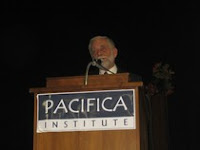 On Feb. 25, 2012, James Harrington, director of the Texas Civil Rights Project, spoke about the Gulen Movement and how to build civil society at the Pacifica Institute for the Salt Lake Interfaith Roundtable’s Interfaith Month celebrations.
Fethullah Gulen started the movement in Turkey in the 1980s as an education and service movement. He created schools that served as alternatives to the Madrassa schools and allowed girls to get an education.

Fethullah Gulen started the movement in Turkey in the 1980s as an education and service movement. He created schools that served as alternatives to the Madrassa schools and allowed girls to get an education.
February 25, 2012
Gülen movement will be liquidated; KCK suspects will be released
Emre Uslu
The title summarizes the gist of the whole discussion of the most recent crisis. This is the plan commonly held by MİT, BDP/KCK (Peace and Democracy Party and Kurdish Communities Union) circles and some pro-negotiation intellectuals.
Public opinion was ready for the implementation of this plan when the prosecutor summoned the MİT undersecretary.
Subscribe to:
Posts (Atom)
